Mailing List


Alexander Christie-Miller
ALEXANDER CHRISTIE-MILLER  is a writer and journalist based in Istanbul. His writing about Turkish politics and culture has been published in Newsweek, the Times, the Atlantic, and other publications. He is a regular contributor to The White Review.


Articles Available Online
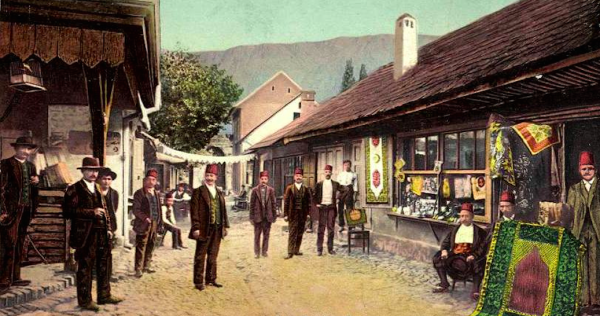

Ada Kaleh

feature

Issue No. 17

Alexander Christie-Miller

feature

Issue No. 17

When King Carol II of Romania set foot on the tiny Danubian island of Ada Kaleh on 4 May 1931, it was said among...

feature

October 2015

War is Easy, Peace is Hard

Alexander Christie-Miller

feature

October 2015

At around midday on 19 July, Koray Türkay boarded a bus in Istanbul and set off for the Syrian...

Halfway through James Bridle’s foreboding, at times terrifying, but ultimately motivating account of our technological present, he recounts a scene from a magazine article about developments in artificial intelligence The journalist is asking a Google engineer to give an image of the AI system developed at Google The engineer’s response was, ‘I do not generally like trying to visualise thousand-dimensional vectors in three-dimensional space’ A few pages later, discussing the famous example of grandmaster Garry Kasparov losing a series of six chess matches to IBM supercomputer Deep Blue, Bridle quotes Fan Hui, an experienced Go player, describing the Google-developed AlphaGo software’s defeat of professional Korean Go player Lee Sedol at the 2,500-year-old strategy game: ‘“It’s not a human move I’ve never seen a human play this move” And then he added, “So beautiful”’   The first challenge for proving a system’s intelligence is image cognition: AI are trained for facial recognition or to scan satellite imagery Still, technology is not primarily considered a visual problem, even if new technologies’ effect on our lives is the subject of countless movies which are often, to echo Bridle’s title, quite dark Bridle, a visual artist whose artworks consider the intersection of technology and representation, from the shadows cast by drones to the appearance of stock images in public space, does not focus his book on representations of technology, but rather on a different visual problem: invisibility In his introduction, Bridle warns that society is powerless to understand and map the interconnections between the technological systems that it has built What is needed, the artist claims, is an understanding that ‘cannot be limited to the practicalities of how things work: it must be extended to how things came to be, and how they continue to function in the world in ways that are often invisible and interwoven What is required is not understanding, but literacy’   Literacy, in Bridle’s use, is beyond understanding, and is the result of our struggle to conceive — to imagine, or describe — the scale of new technologies A lot of the examples in the book are visual and descriptive, providing new

Contributor

August 2014

Alexander Christie-Miller

Contributor

August 2014

ALEXANDER CHRISTIE-MILLER  is a writer and journalist based in Istanbul. His writing about Turkish politics and culture has been...

Forgotten Sea

feature

Issue No. 11

Alexander Christie-Miller

feature

Issue No. 11

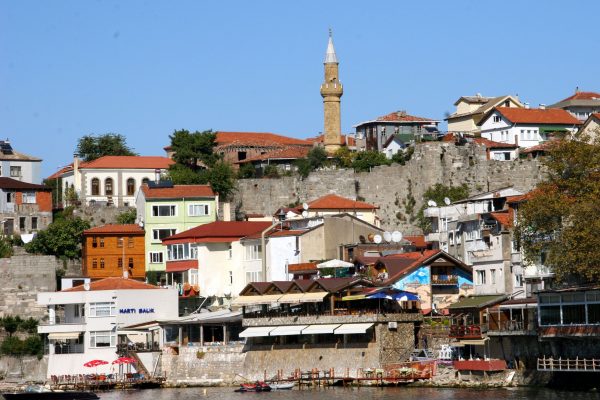
I. As I stood on the flanks of the Kaçkar Mountains where they slope into the Black Sea near the town of Arhavi, the...
Occupy Gezi: From the Fringes to the Centre, and Back Again

feature

July 2013

Alexander Christie-Miller

feature

July 2013

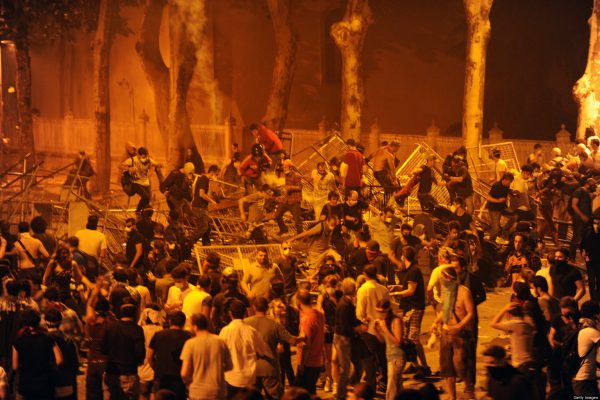
Taksim Square appears at first a wide, featureless and unlovely place. It is a ganglion of roads and bus routes, a destination and a...

READ NEXT

feature

July 2013

Occupy Gezi: From the Fringes to the Centre, and Back Again

Alexander Christie-Miller

feature

July 2013

Taksim Square appears at first a wide, featureless and unlovely place. It is a ganglion of roads and bus...

fiction

January 2015

One Out of Two

Daniel Sada

TR. Katherine Silver

fiction

January 2015

Now, how to say it? One out of two, or two in one, or what? The Gamal sisters were...

feature

May 2014

How Imagination Remembers

Maria Fusco

feature

May 2014

How imagination remembers is twofold, an enfolded act of greed and ingenuity. I believe these impulses to be linked...


Get our newsletter


* indicates required