Mailing List


Jonathan Gibbs

Jonathan Gibbs was shortlisted for the White Review Short Story Prize 2013. He has since published a novel, Randall or the Painted Grape (Galley Beggar Press).


Articles Available Online


Jessie Greengrass’s ‘Sight’

Book Review

February 2018

Jonathan Gibbs

Book Review

February 2018

Jessie Greengrass’s debut story collection caught my eye with its delightfully extravagant title, An Account of the Decline of the Great Auk, According to...

feature

May 2016

Cinema on the Page

Jonathan Gibbs

feature

May 2016

Film is a bully. It wants to make its viewers feel, and it has the tools to do so....

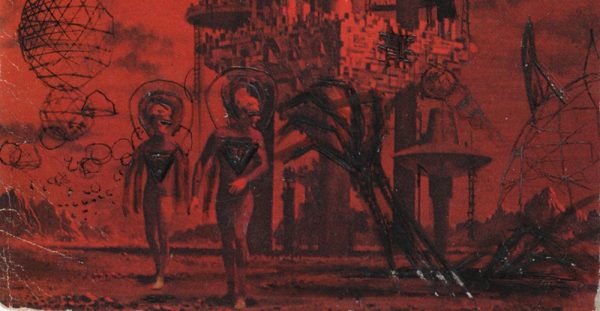
In Robert Ferro’s 1988 novel Second Son, Mark Valerian suffers from an unnamed illness afflicting gay men, spread by sex, and for which there is no cure Mark’s only hope seems to be a medical trial that requires the transfusion of genetically identical white blood cells, until his friend Matthew, who recently lost his lover to the ‘Plague’, begins writing letters to Mark revealing another potential cure Shortly after the disease erupted some seven years previously, a group of gay men made contact with aliens, living on a planet called Splendora, who are ‘long, lean, delicate, in the sense of a swimmer’s body’ ‘Darling,’ Matthew writes, ‘they are gay’ The aliens’ advanced technology will enable a group of gay men to escape to Splendora, be cured of their illness, and live safely on a planet populated only by gay men – and gay aliens Mark dismisses Matthew’s letters as the fantasies of a dying ‘queen out of control’; his family eventually acknowledge his illness, and a brother donates the blood needed for his trial Yet the novel ends with Mark and his lover Bill gazing at the sky, ‘waiting as if for the ship to Splendora’ – attracted, in spite of themselves, to Matthew’s fantasy of a gay planet It was a fantasy that seemed to promise everything, but there was one detail Matthew couldn’t explain about how this community could survive: ‘Reproduction is something of a mystery’   *   For centuries, writers, artists, and speculative thinkers have used science fiction to imagine the possible futures we might have That’s one reason the genre has long been a storehouse of fantasies about reproduction Imagining a different future requires imagining a different way of getting there, and the way we get there, the way any group makes it to any future, is by reproducing over time Science fiction’s reproductive fantasies have rarely been utopian in any simple sense, since one group’s utopia can all too easily slide into another’s dystopia But because of the genre’s commitment to world building — its requirement to have, if not always directly reveal, a logical

Contributor

August 2014

Jonathan Gibbs

Contributor

August 2014

Jonathan Gibbs was shortlisted for the White Review Short Story Prize 2013. He has since published a novel, Randall or...

The Story I'm Thinking Of

fiction

April 2013

Jonathan Gibbs

fiction

April 2013

There were seven of us sat around the table. Seven grown adults, sat around the table. It was late. We had eaten, and we had...

READ NEXT

feature

February 2015

A Closer Joan

Shawn Wen

feature

February 2015

Here are a few of the Joans I know. The girl who arrives at Port Authority Bus Terminal in...

poetry

Issue No. 14

Interrogations

Rebecca Tamás

poetry

Issue No. 14

INTERROGATION (1)     Are you a witch?   Are you   Have you had relations with the devil?...

Interview

Issue No. 1

Interview with Tom McCarthy

Fred Fernandez Armesto

Interview

Issue No. 1

For those expecting him to be, as the New Statesman called him, ‘the most galling interviewee in Britain’, Tom...


Get our newsletter


* indicates required