Mailing List


Patrick Langley
Patrick Langley's debut novel Arkady was published by Fitzcarraldo Editions in March 2018. He writes on contemporary art for Frieze, Art Agenda, and other publications. He is a contributing editor at The White Review.

Articles Available Online


Jesse Ball’s ‘Census’

Book Review

May 2018

Patrick Langley

Book Review

May 2018

Reading Jesse Ball’s new novel feels like being hypnotised, or like having your heart broken – but really it feels like both at once....

Book Review

November 2017

M. John Harrison's 'You Should Come With Me Now'

Patrick Langley

Book Review

November 2017

In a 2012 interview with the Guardian, M. John Harrison argued that the segregation of literature into genres is ‘a...

Michaël Borremans is among the most important painters at work in the world today His practice combines a lifetime’s engagement with the history of painting – Goya, Manet, Velázquez and Magritte cast long shadows over the dark, enigmatic elegance of his subject matter and his brushwork – with a contemporary sensibility conditioned by the violence of recent European history, the legacy of surrealism and the new possibilities for image-making offered by photography and cinema (in both of which media he has worked)   The lower gallery of the Belgian artist’s latest exhibition at David Zwirner, London, is populated by a chorus line of dancing figures cloaked in the black robes and pointed hoods of a Bunraku puppeteer These eighteen, exquisitely painted oil paintings on board encircle the room, enacting a ritual performance with the gallery-goer at its centre (the artist conceives of the series as a single work) On the gallery’s upper level are ranged a supplementary cast of hooded figures, here performing inscrutable acts, at turns violent, meditative and surreal The suggestiveness of his set pieces – the costumes alone conjure such disparate associations as the Ku Klux Klan’s ‘glory suits’, monastic robes, Abu Ghraib and the so-called War on Terror – is counterpointed by their refusal to offer up any conclusively satisfying single interpretation As narratives they unravel, offering up only visions of a world operating according to rules that are obscure and by extension frightening, which isn’t to say that world isn’t our own   I talked to Jeffrey Grove, curator of As sweet as it gets, the major retrospective of Borreman’s work co-hosted by Dallas Museum of Art and the Centre for Fine Arts Brussels (BOZAR) and a long-time champion of Borremans, on the eve of the opening of the Zwirner show Having walked through the exhibition, we perched on a recessed ledge in the upper gallery in semi-darkness, surrounded by paintings glowing and haloed under spot lights   QThe White Review — These paintings are difficult to parse: the straightforward pleasure they take in the laying down of paint, the representation of fabric and the expression of movement, is complicated by historical and cultural associations as well as art historical references to Goya, Matisse, Manet and more. Can you pick a way through them?AJeffrey Grove — I have always been attracted, even in Michaël’s earliest work, by his ability to condense a great deal of visual information into his paintings and still arouse the viewer’s curiosity. There is a lot of space in his work. That relates to his relationship with representation—are these paintings representational; are they non-representational; how do you paint something that doesn’t exist? That quality of openness is very much part of his attentive process to the act of making something.   In these works, although there are clear associations and implications, he is very careful not to make them conclusive. That is, to me, why he remains interesting. It’s not something that all contemporary art does well. Even though this is a more aggressive body of work, even though it seems to have very clear associations that it almost begs the viewer to complete, it can also be read from angles which completely dispel those associations.QThe White Review — The suite of works on the ground floor seem collectively to describe a narrative that the reader is invited to figure out. The viewer is encouraged to see something going on, but it’s not clear what, and neither does the artist provide any kind of coherent thread. It’s like being dropped into a story in media res.AJeffrey Grove — It struck me on seeing them that these paintings more consistently approach drawing than any works Michaël has shown before. He has always said that his drawings can have a much more narrative quality than the paintings, so his willingness to go into that territory indicates to me a significant shift—whether I’m right or wrong I don’t know, but every two to three years there is a shift in Michaël’s work, and a shift towards the narrative potential of drawing is what I see in this body of work.QThe White Review — And that is exaggerated by the arrangement of these works as a suite, with the sense of a story building through the series.AJeffrey Grove — Well Goya’s Witches and Old Women Album is an acknowledged influence, and as a lithographer Michaël would have made multiple images off of one plate; as a photographer, he does the same thing. I think of these works as filmic in the sense that, in a film, each individual frame or image is completely different, and all the decisions are made by looking through the lens and cutting it the way you would a shot in the film.QThe White Review — The works are very theatrically presented in the space, under these spotlights, and there’s something about their theatricality that seems to undermine easy associations or obvious narratives. In this one – ‘The Badger’s Song’ – the figures dance around a badger who holds out a sheet of blank paper. It seems apt.AJeffrey Grove — I thought it was a bear, initially, and it reminded me that the bear serves as a comparable placeholder in a lot of literature and culture. They’re usually in chains, muzzled, and as such they’re meant to entertain us. But they are the most abject creatures at the same time. So the badger—the bear in my mind—plays that role here. It is attempting to offer something up while at the same time being threatened.QThe White Review — Then, on returning to the ground floor of the gallery, you realise that you, the visitor, are suddenly the point around which all these figures are dancing.AJeffrey Grove — Michaël’s work, I used to say implicates but now say includes, the viewer. Even though the paintings seem brutal, I find them somehow more generous for that reason. They are not accusatory. That has to do with the scale—there is nothing more sensual than looking at a work this size. You’re encouraged to look at these paintings as you look at drawings, which is a much more intimate experience. You have to spend a considerable amount of time with the works.QThe White Review — Michaël has said that this body of work is, of all his work, the most engaged with the contemporary condition. That seems initially like a strange assertion, given that the costumes evoke this particularly ritualistic, paganistic atmosphere which seems not to be of our time. Yet of course our time is a brutal one. These images are both brutal and distant; violent and seemingly unmoved by violence.  AJeffrey Grove — The costume seems to me to denote someone who is both absolutely present and antithetically absent. For me, that is the perfect metaphor for how Michaël has always described the subjects of his work. The shifting of scale – the figures are often miniaturised against outsized backgrounds – combines with the way that he domesticates these exotic, eastern kabuki costumes. They are brought into the home.   I was talking to Michaël yesterday and I pointed out the gruesomeness of one painting, in which a woman is clutching a severed limb. He looking nonplussed and just said, ‘yes, but we see severed limbs all the time.’ And of course, he is absolutely right. We might not see them on the streets of London, but in other parts of the world it’s a more familiar sight. If you watch television you see images of murder, torture and rape every night; those are the most popular shows in America. Michaël is in some sense a Pop artist, because what could be a more accurate reflection of today’s culture than this? 

Contributor

August 2014

Patrick Langley

Contributor

August 2014

Patrick Langley’s debut novel Arkady was published by Fitzcarraldo Editions in March 2018. He writes on contemporary art for Frieze, Art...

Art

September 2014

Semi Floating Sculpture

Luke Hart

Patrick Langley

Art

September 2014

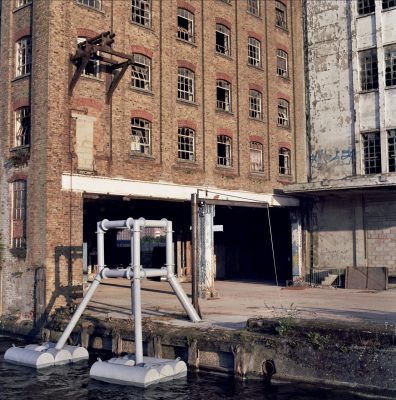
Luke Hart will meet me at Gate 7. I get the text on the DLR, heading east past Canary...

Ordinary Voids

feature

Issue No. 9

Ed Aves

Patrick Langley

feature

Issue No. 9

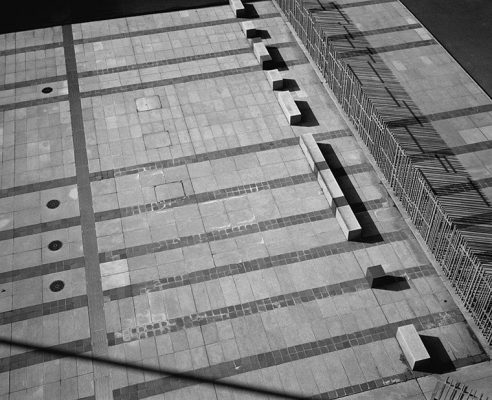
I am standing in a parallelogram of shrubbery outside London City Airport. Ed is twisting a dial on his Mamiya RZ67 and squinting into its viewfinder. He...
Car Wash

fiction

January 2013

Patrick Langley

fiction

January 2013

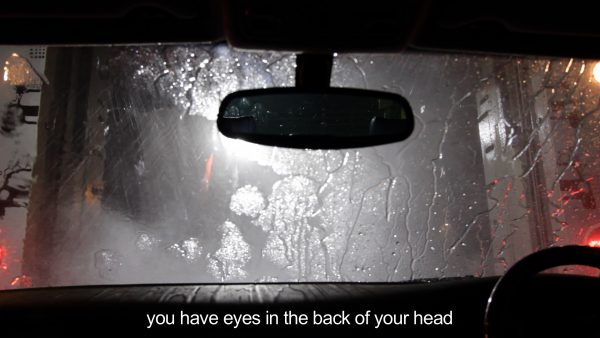
He is sitting on the back seat of a car, somewhere in France. It’s a bright blue day, absurdly hot, and the roads are...
Ryan Trecartin: The Real Internet is Inside You

Art

April 2012

Patrick Langley

Art

April 2012

 ‘What’s that buzzzzzzzzzzzzzzzzzzzzzzzzzzzzzzzing?’ Marshall McLuhan   1: Your Original Is Having A Complete Human Change Meltdown Makeover   It’s difficult to describe Ryan Trecartin’s...
Nigel

poetry

September 2011

Patrick Langley

poetry

September 2011

Jamie sat alone at the edge of the dance floor and wondered how long it would be until Nigel arrived. The band had been...
Beyond the Horizon

fiction

Issue No. 1

Patrick Langley

fiction

Issue No. 1

Listen to the silence, let it ring on. (Joy Division, Transmission) I It is not yet dawn. The city is a distant murmur. Laid...

READ NEXT

feature

September 2014

The Mediatisation of Contemporary Writing

Nick Thurston

feature

September 2014

Trying to figure out what marks contemporary literature as contemporary is a deceptively complicated job because the concept of...

feature

January 2016

Suite

Pierre Senges

TR. Jacob Siefring

feature

January 2016

‘Suite’ was born of an invitation Pierre Senges received to contribute to an anthology on the future of the novel (Devenirs...

fiction

April 2014

by Accident

David Isaacs

fiction

April 2014

[To be read aloud]   I want to begin – and I hope I don’t come across as autistic...


Get our newsletter


* indicates required